

Introduction
One of the best methods for brands to interact with contemporary consumers is through video. When consumers want to quickly grasp a product, service, or brand story, they frequently choose to watch an interesting video. Throughout the consumer journey, a well-thought-out video marketing strategy aids companies in drawing attention, outlining value, fostering trust, and motivating action.
What Is Video Marketing?

An organized plan for producing, disseminating, and promoting video content around certain company objectives is called a video marketing strategy. It outlines the distribution channels, posting schedule, video format, primary message, target audience, and performance measures.
Businesses should link each piece of content with a specific goal rather than producing videos at random. Typically, a good strategy consists of:
- Clearly defined business and marketing objectives
- A specific target market
- Relevant subjects and types of videos
- A regular publishing schedule
- Measurable metrics for performance
Why Video Marketing Matters for Businesses
Video makes knowledge easier to comprehend and retain by fusing music, graphics, and narrative. Stronger client relationships and the simplification of difficult concepts are two benefits of an effective video marketing strategy.
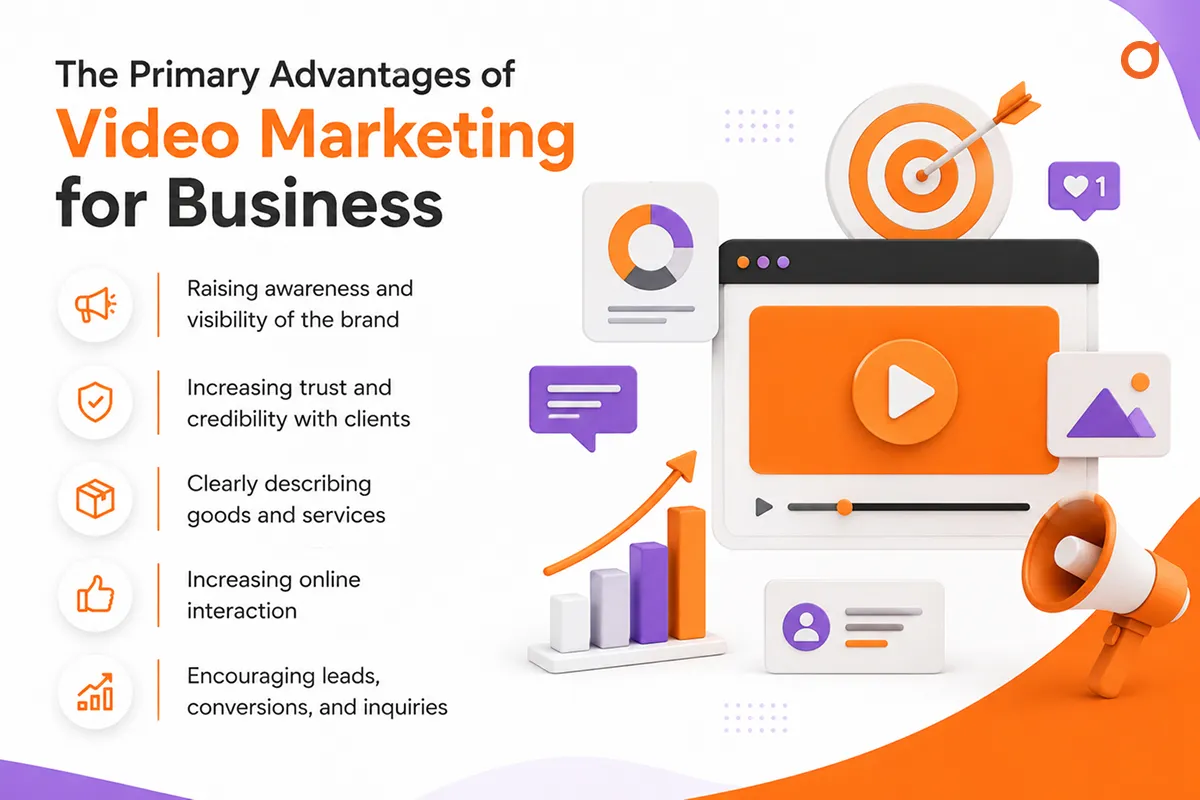
The following are the primary advantages of video marketing for business:
- Raising awareness and visibility of the brand
- Increasing trust and credibility with clients
- Clearly describing goods and services
- Increasing online interaction
- Encouraging leads, conversions, and inquiries
One well-made video can frequently be modified for websites, social media, ads, presentations, and sales communication, which is another benefit of video marketing for business. Businesses looking for professional execution can work with an experienced Video Production Company In Ahmedabad to transform their marketing ideas into engaging, high-quality video content.
How to Create an Effective Video Plan
Establish the primary goal first, such as increasing awareness, educating consumers, launching a product, or generating leads. Next, research the needs, inquiries, problems, preferences, and purchasing patterns of the audience.
A useful content schedule is another essential component of an effective video marketing strategy. In addition to ensuring that videos serve broader initiatives rather than being produced solely when an urgent need arises, pre-planning topics and formats helps maintain consistency.
Best Video Marketing Techniques
Attention and retention can be increased by employing useful video marketing techniques. Because viewers make a snap decision about whether to keep watching, the opening few seconds are crucial. A compelling hook should present an issue, advantage, or query right away.
These strategies can help businesses enhance video performance:
- Start with an attention-grabbing hook
- Concentrate on one primary message
- Instead of constantly selling, use storytelling
- Include a pertinent call to action
- Convert lengthy videos into brief segments
Subtitles, searchable titles, distinct thumbnails, and platform-specific editing are further helpful video marketing techniques.
Video Marketing Ideas for Business Growth
The objective determines the appropriate content format. While certain video marketing ideas are better for teaching, trust-building, or conversions, others are helpful for raising awareness.
Product demos, testimonials, founder tales, instructional films, case studies, FAQs, behind-the-scenes content, and brief social media videos can all be produced by businesses. It is possible to determine what consumers find most helpful and interesting by testing various video marketing ideas.
Choosing the Right Video Marketing Platforms
The functions of various video marketing platforms vary. Long-form material, explainers, and tutorials all perform well on YouTube. While LinkedIn is helpful for B2B communication, expert insights, and case studies, Instagram works well for reels and brief visual tales.
Platform | Best Use | Suitable Content |
YouTube | Search and discovery | Tutorials, explainers |
Reach and engagement | Reels, product clips | |
B2B authority | Expert videos, case studies | |
Promotion | Ads, customer stories | |
Website | Conversion support | Brand and service videos |
Instead of releasing the same version everyplace, businesses should select video marketing platforms based on audience behavior, campaign objectives, and format.
Why Work With a Video Marketing Company?
Strategy, scripting, filming, sound, editing, and distribution are all part of professional video production. These components can be handled by a skilled video marketing company while maintaining content that is consistent with brand and marketing goals.
For companies without an internal production team, a trustworthy video marketing company can enhance campaign planning, storytelling, consistency, and production quality. For brands focusing on Instagram, Facebook, LinkedIn, and other social channels, a professional Video Maker for Social Media can help create platform-specific content that attracts and engages the right audience.
How to Measure Your Video Marketing Strategy Success
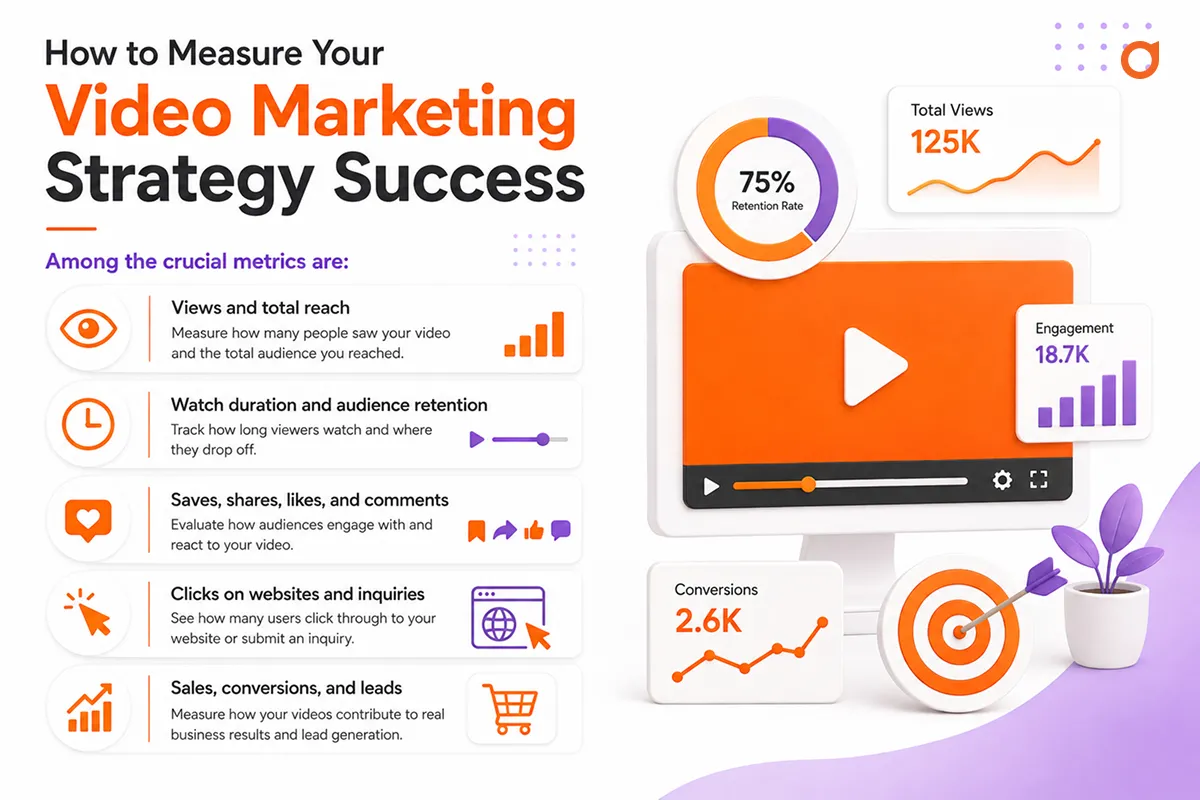
Performance measurement should be a part of every video marketing strategy. Views by themselves do not demonstrate whether content advances corporate objectives. Metrics that align with the goals of each campaign should be monitored by brands.
Among the crucial metrics are:
- Views and total reach
- Watch duration and audience retention
- Saves, shares, likes, and comments
- Clicks on websites and inquiries
- Sales, conversions, and leads
Frequent analysis helps enhance future themes, hooks, formats, and calls to action by revealing what users watch, skip, share, and react to. Strong storytelling helps brands turn complex Business Messages into Memorable visual experiences that audiences can understand, remember, and connect with.
Common Video Marketing Mistakes to Avoid
Uncertain aims, weak hooks, subpar audio or visuals, excessive advertising, irregular publication, and disregarding analytics are typical errors. Additionally, companies should refrain from utilizing the same video format across all platforms.
Relevance, quality, consistency, and quantifiable outcomes are the main components of a successful video marketing campaign. Each video should promote a specific business objective, address a client need, or resolve a communication issue.


Conclusion
Instead of using video as a one-time marketing campaign, a well-thought-out video marketing strategy can make it a long-term growth tool. Businesses may increase exposure, trust, engagement, and conversions with effective storytelling, expert execution, appropriate channels, and consistent performance monitoring. Producing the appropriate material for the appropriate audience should be the main priority.
Frequently Asked Questions
Depending on the marketing goal, product films, testimonials, explainers, instructional materials, case studies, and brand narratives can all be effective.
Frequency is not as important as consistency. Companies should select a reasonable publishing schedule that preserves relevance and quality.
Professional production is beneficial for brand films, ads, launches, and significant campaigns, but not all videos require a substantial budget.

Mahendra Bhatiya
With 15+ years of brand-building experience, Mahendra Bhatiya helps food and FMCG businesses transform good products into trusted, memorable, and market-ready brands. His focus is on building brands that inspire stronger customer confidence, create a better market presence, and deliver long-term business value.