
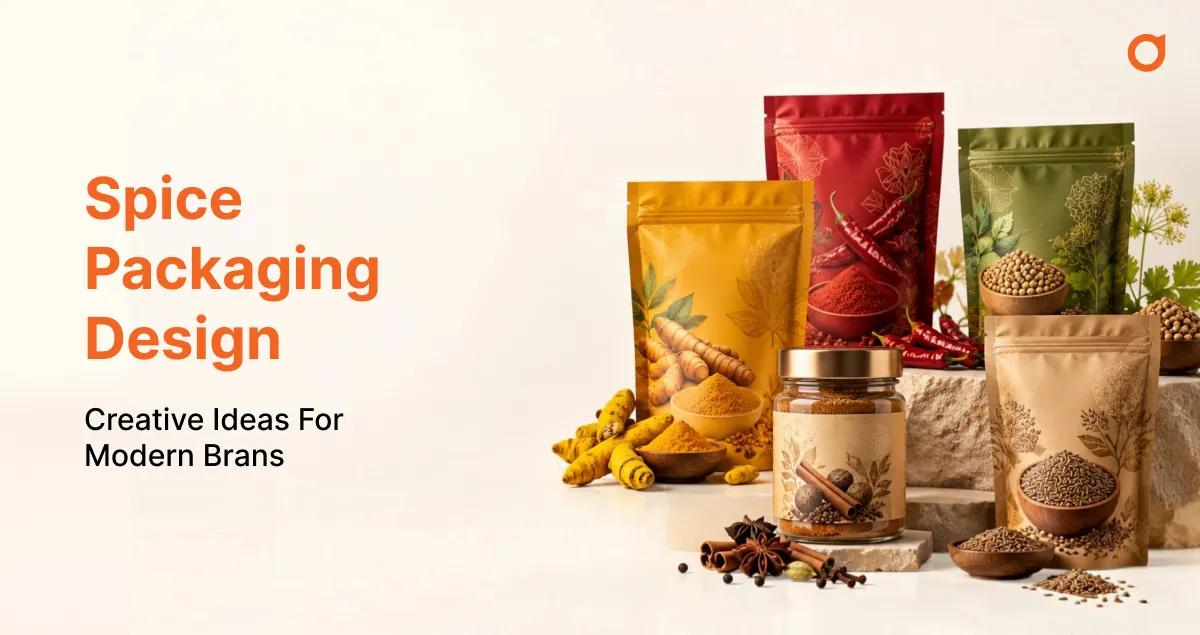
Customers’ awareness, comprehension, and recall of a food brand are greatly influenced by its packaging. Packaging serves more purposes for spice companies than only shielding their goods from contamination, moisture, and air. Additionally, a professional spice packaging design conveys company individuality, authenticity, freshness, and quality. Customers frequently assess multiple items before making a purchase in a competitive market, so packaging must provide a good first impression while making key information simple to comprehend.
Additionally, contemporary consumers demand packaging that is esthetically pleasing, useful, convenient to use, and easy to store. Premium colors, simple text, drawings of ingredients, regional patterns, and sustainable materials are all being experimented with by brands. A basic spice product can seem more unique and polished with creative packaging design ideas.
Why Spice Packaging Design Matters for Modern Brands
Customers’ perceptions of a product can be influenced by an effective spice packaging design even before they test it. The entire brand image is influenced by a variety of elements, including colors, typography, images, illustrations, and pack structure. While traditional spice brands may incorporate regional design features and cultural patterns, premium brands may employ simple layouts and sophisticated color schemes.
Additionally, attractive packaging increases consumer trust. Information, including ingredients, net quantity, certificates, manufacturing data, and expiration dates, should be easily accessible to buyers. Clear presentation of these facts makes the brand seem more reliable and well-organized.
Among the main advantages are:

- Enhanced awareness of the brand
- Enhanced visibility of the shelf
- Unambiguous product communication
- Increased consumer confidence
- Increased perceived worth of the product
Creative Spice Packaging Ideas for Better Shelf Appeal
The greatest spice packaging ideas strike a balance between originality and lucidity. Packaging should be eye-catching without being overly crowded. To establish a unique look, brands can employ bold typography, food photographs, ingredient graphics, classic themes, or straightforward graphic patterns. For professional branding support, businesses can explore a Packaging Design Company in Ahmedabad to develop packaging that aligns with product positioning and customer expectations.
Another useful strategy is color coding. Cumin can utilize earthy hues, coriander can use green, turmeric can use yellow, while chili items can use red. These colors provide consistency throughout the visual system while assisting customers in readily identifying products.
Here are five practical design strategies:
- Bold typography in simple layouts
- Ingredient-inspired illustrations
- Color-coded product categories
- Traditional patterns with modern styling
- Matte or metallic premium finishes
These spice packaging ideas can improve product recognition while keeping the pack clean and easy to understand.
Important Elements of a Good Spice Packet Design
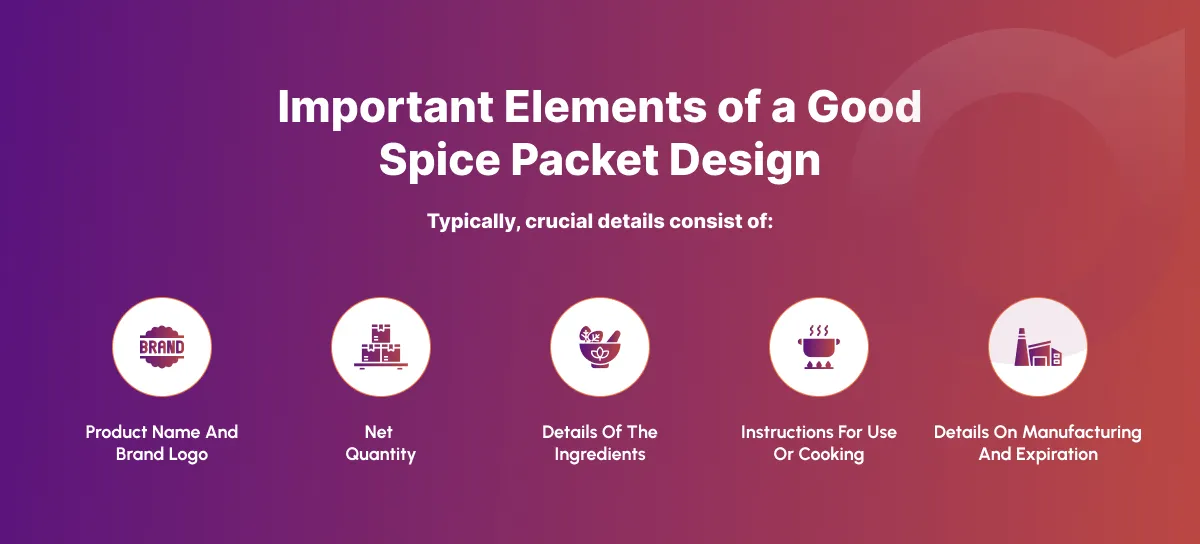
A well-designed spice packet design organically directs the customer’s attention. The product and brand names should be prominently displayed, followed by details about usage, ingredients, amount, and certificates.
Even when the product is viewed from a distance, typography should still be readable. Although ornamental fonts might add individuality, they shouldn’t make text harder to read. Excessive text should also be avoided on the front panel.
Typically, crucial details consist of:
- Product name and brand logo
- Net quantity
- Details of the ingredients
- Instructions for use or cooking
- Details on manufacturing and expiration
A consistent spice packet design also helps customers recognize multiple products from the same brand.
Modern Masala Packaging Design Styles
Spices from India might require an approach where there is a need to strike a balance between the rich culture and contemporary designs of packaging. There are ways to incorporate traditional elements into the masala packaging design without making it look out-of-date.
Elements like patterns, illustrations, food references, and pictures of ingredients can be blended with simple typography and layouts. Premium items can have darker backgrounds in their designs, whereas mass-produced items can have bright colors in their designs.
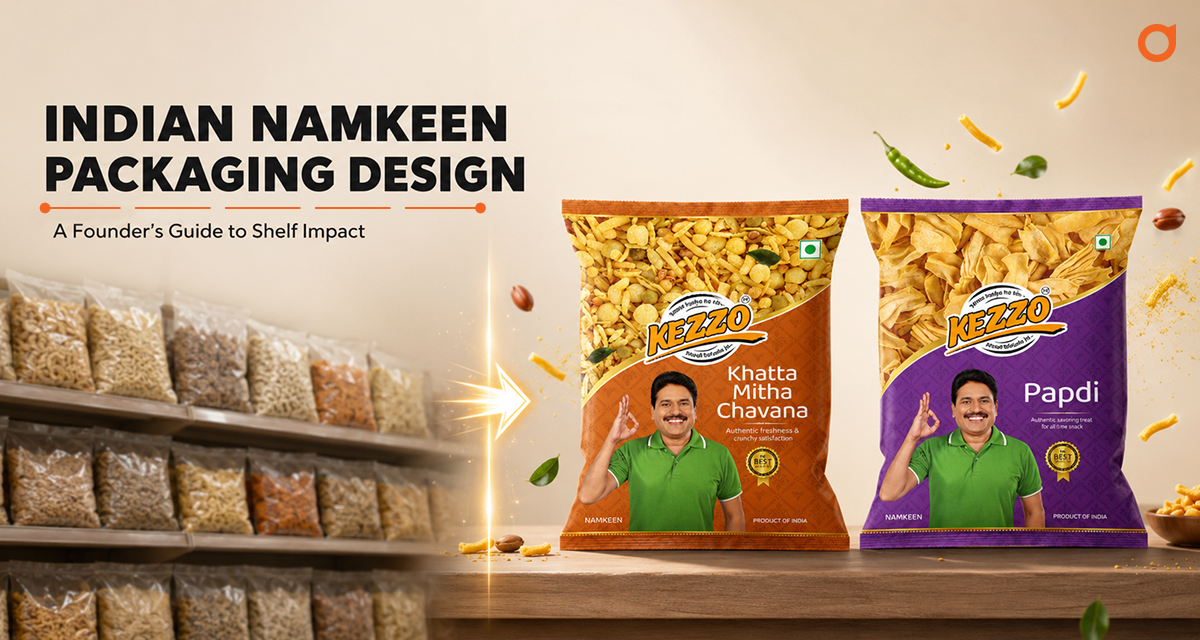
The right masala packaging design should reflect the target audience, pricing, category, and overall brand positioning. Brands looking for more food-category inspiration can also refer to Namkeen Packaging Design Ideas and Strategy for practical insights into creating distinctive and market-relevant packaging.
Popular Packaging Formats for Spice Brands
Choosing the right packaging format is as important as designing the graphics. A functional spice packaging pouch design should protect flavor and aroma while remaining easy to handle, open, store, and use.
Packaging Format | Main Benefit | Best For |
Stand-up pouch | Strong shelf visibility | Modern spice brands |
Flat pouch | Lightweight and economical | Everyday spices |
Resealable pouch | Helps maintain freshness | Frequently used spices |
Glass jar | Premium appearance | Gourmet products |
Box with inner pouch | Extra branding space | Gift and premium ranges |
A carefully planned spice packaging pouch design can improve convenience while strengthening the customer’s overall experience with the product.
Minimal Packaging for a Premium Look
Minimalism is one of the rising trends in spice packaging design due to its stylish, contemporary, and confident looks. It involves the use of simple layouts, controlled colors, straightforward product names, and few design elements.
The minimal packaging does not have to be an empty look. One can add subtlety to the packaging through the use of subtle textures, illustrations, photography, or print finishes.
It is especially suitable for premium, organic, and gourmet spice packages.
Sustainable Packaging for Modern Consumers
The concept of sustainability is gaining prominence within food packaging practices. There has been an increased trend among brands of using recyclable materials, decreasing plastic content, reducing the weight of packaging, and simplifying the processes involved.
Consumers have become more conscious about packaging waste, and so adopting sustainable practices would help in developing a positive brand perception. However, such practices should not compromise the safety or shelf life of the product. Spices require protection from air, moisture, and light.
The packaging design ideas must therefore find a balance between sustainability and practical considerations.
Creating a Consistent Product Range
Consistency is essential for brands selling multiple spices and masalas. Every pack should clearly belong to the same brand while still helping customers differentiate between products.
A structured spice packaging design system can maintain the same logo position, typography, information hierarchy, and graphic style across the range. Product-specific colors or ingredient visuals can then be used to create variation.
The whole product range will look professional and well organized.
Balancing Traditional and Contemporary Design
Spices have much association with culture, family traditions, regional cuisine, and traditional cooking styles. These elements may be employed by the package design in order to evoke strong emotions from the customers.
Traditional design, hand-written elements, regional art, and images of the cuisine will help to achieve authenticity. Nevertheless, the whole design must look fresh and clear at the same time.
Choosing the Right Packaging Direction
Before finalizing a design, brands should study their target audience, competitors, pricing, retail environment, and positioning. A premium product sold in supermarkets may need a different design approach from a product aimed at local retail stores.
An effective spice packaging design should support the brand strategy rather than simply follow trends. It should remain distinctive, practical, readable, and flexible enough to work across different products and pack sizes. To understand how packaging can contribute to long-term brand value, you can also read about Product Packaging as a strategic brand asset.


Conclusion
Effective spice packaging design involves branding, product protection, visual attractiveness, and communication. Effective packaging can help in increasing the visibility of the product and build more customer trust. Spices can develop an effective identity by blending modern and functional designs with effective story-telling techniques.
Frequently Asked Questions
Typography, color balance, ingredient images, brand identity, and structured information may contribute to making spice packages appealing.
Stand-up and resealable pouches are widely used because they are lightweight, practical, and help maintain product freshness.
Clean layouts, premium finishes, controlled colors, strong typography, and subtle traditional elements can create a modern appearance.

Mahendra Bhatiya
With 15+ years of brand-building experience, Mahendra Bhatiya helps food and FMCG businesses transform good products into trusted, memorable, and market-ready brands. His focus is on building brands that inspire stronger customer confidence, create a better market presence, and deliver long-term business value.